Then & Now

The THEN/NOW segment of the ReViewing Ireland project involved choosing a photograph from the National Library of Ireland digital archives, then going to the same spot to take a current photograph. Locations were chosen based on the story the older and new photographs, when juxtaposed, could tell us about Ireland’s environment.
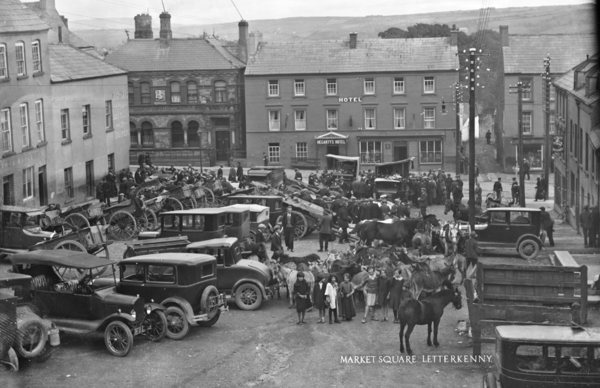
ULSTER: Market Square, Letterkenny, County Donegal
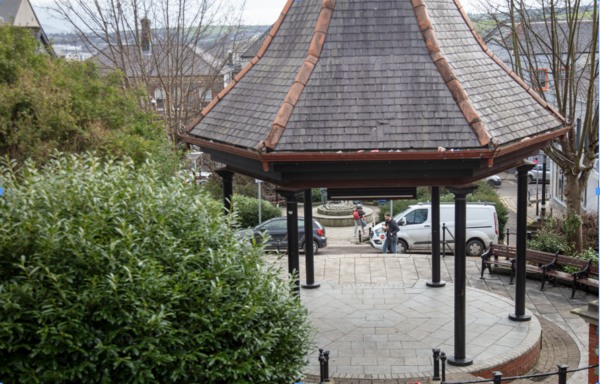
Market Square, Letterkenny, County Donegal 2025
The earlier photograph of Market Square, Letterkenny, was taken between about 1900 and 1939. It is part of the Eason Photographic Collection in the National Library of Ireland (NLI). I took the new photograph on 17 January 2025, knowing that the square was soon to be redesigned. In time, this photograph can be compared with whatever replaces the current layout. Seen together, the two images show how the square’s design affects views of the surrounding buildings and distant mountains. Many Irish towns have filled squares and diamonds with street furniture. This can block the openness these spaces once had.
MUNSTER: Ardnacrusha, County Clare
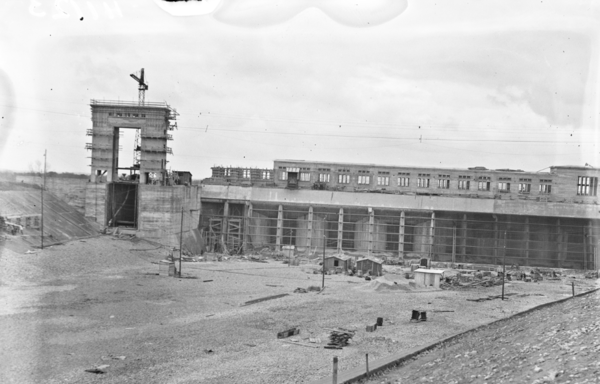
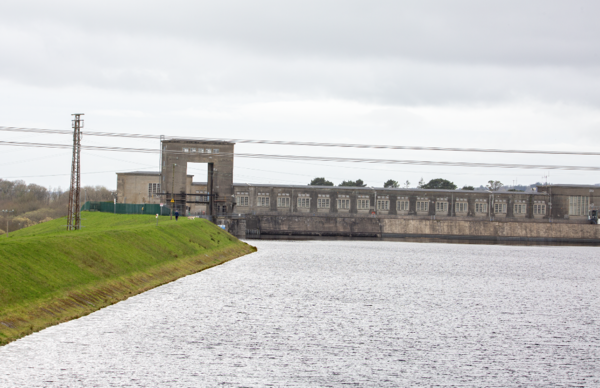
The 1929 photograph that inspired this revisit was taken by Independent Newspapers (Ireland) Ltd. It is part of the Independent Newspapers collection in the National Library of Ireland (NLI). Ardnacrusha cost about £5.2 million to build in 1925–1929, which was approximately 20 per cent of the Government’s entire budget at the time. It was a landmark project in Irish history. In March 2025, when I revisited the site, the ESB had a target to achieve net zero by 2040. Hydro-electric power plays a key role in achieving this goal. The most recent report on Ireland’s CO2 emissions from the Environmental Protection Agency (EPA) predicts that we are set to miss our 2030 target of reducing emissions by 51 per cent. The expectation is a 23 per cent reduction only.
CONNAUGHT: Old Northern Bank Building,
Mohill, County Leitrim
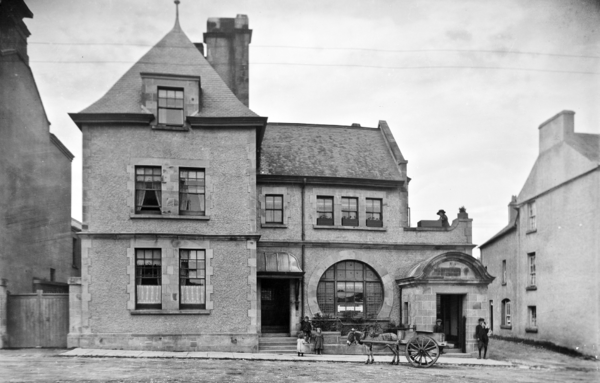
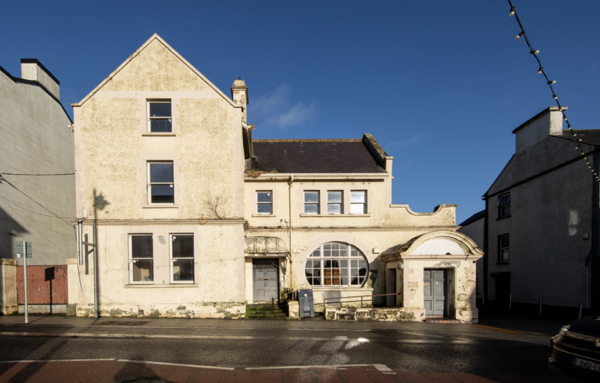
The old photograph of the Northern Bank in Mohill, County Leitrim was taken between about 1900 and 1939. It is part of the Eason Photographic Collection in the National Library of Ireland (NLI). The building, completed around 1905, is an unusual example of Art Nouveau architecture in Ireland. In November 2024, Leitrim councillors discussed derelict properties, including this long-abandoned bank. In Leitrim, almost 12 per cent of housing stock is vacant or derelict, with potential for homes over derelict shops or conversion of entire business premises into homes. In Ireland in 2025, approximately 81,000 residential properties were vacant or derelict, but only 2,377 registered as liable for the Vacant Homes Tax (VHT) (cited from Revenue). Dublin has the fewest vacant or derelict residential properties. Leitrim, Mayo and Roscommon have the highest levels, at about 12 per cent of housing stock. Nationally there are 2.17 million residential properties overall, so vacant homes represent 3.8 per cent of the total housing stock.
LEINSTER: Main Street, Abbeyleix, County Laois
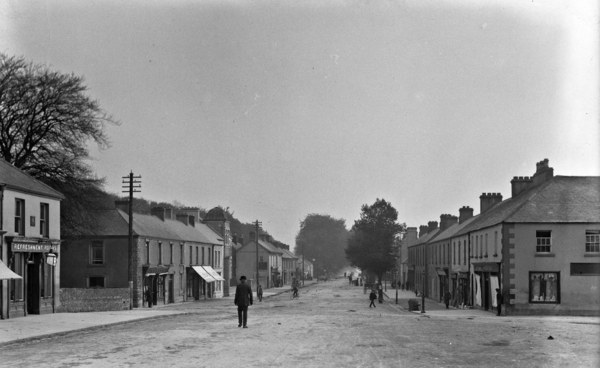
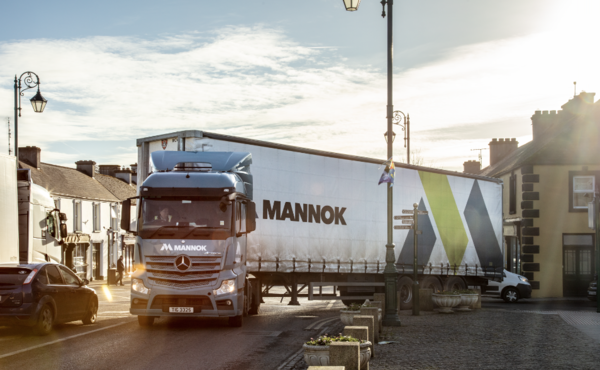
The earlier photograph of Abbeyleix Main Street was taken between 1900–1920. It is part of the Eason Photographic Collection in the National Library of Ireland (NLI). The newer photograph illustrates what I witnessed over a period of about 45 minutes, while having a coffee at the ‘Daily Dose: Gluten and Dairy Free Café’. Huge haulage trucks went up and down the narrow street. The air was foul, which is especially sad considering Abbeyleix was named Ireland’s Tidiest Town in 2023. The M8 motorway bypasses the town, but still up to 600 trucks a day pass through the heritage town, likely to avoid motorway tolls. In 1915, Ireland had 9,850 cars and nearly the same number of motorcycles. By May 2024, car ownership was close to 2.5 million.
Tuilleadh

